At the start of the 1800s, more than three quarters of the world’s population lived in extreme poverty.
43% of children died before age 5. Only 12% of adults could read. Nearly everything people needed, whether food, clothing, or shelter, was made by human or animal labor. Machines made physical work dramatically cheaper, and the wealth and time that followed created better food, clean water, medicine, schools, and the internet age of ubiquitous information. Today we experience a life that is incomparable to what came before: cheaper and faster physical work is the biggest direct lever we have for making the world a better place.
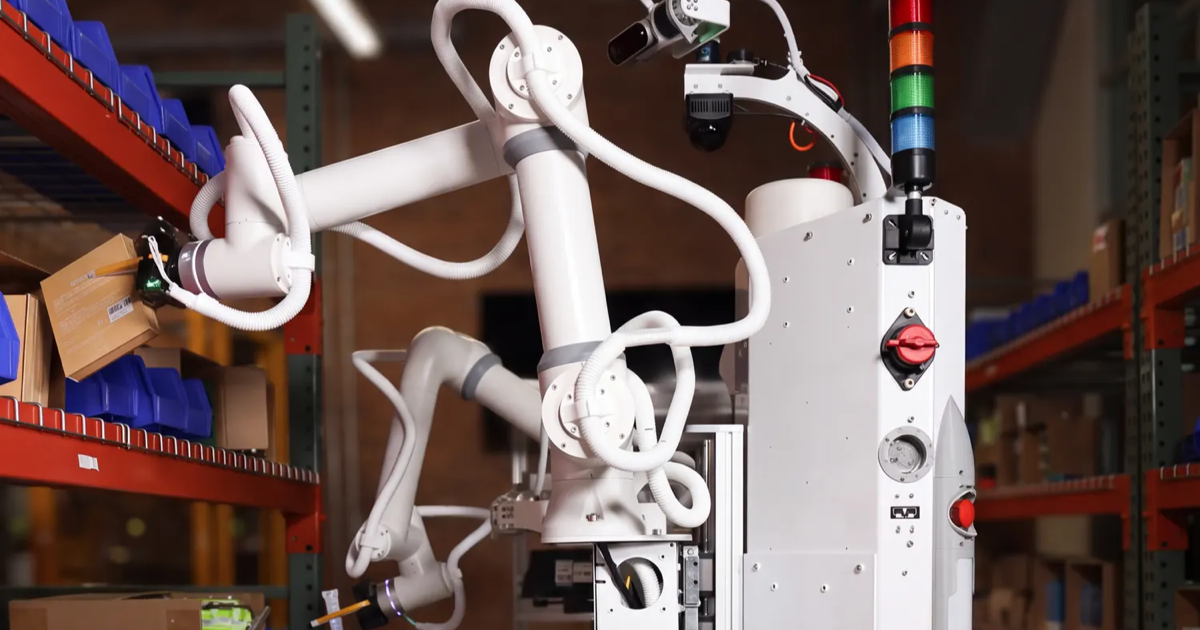
And even with the massive technical progress of the past decades, robotics has yet to make the same mark. Humans and repetitive machines run the physical world, while robots are still a rounding error in our lives. The United States deployed 38,000 robots into businesses in 2025 against a population of 340 million. Roughly nine out of ten US factories and warehouses don’t have a single robot. And those are the most automated areas of the physical economy.
The robotics field has coalesced around a belief that intelligence is the bottleneck to widespread proliferation of robotics. But if there are 8 billion people on earth who already have that intelligence, why do we need to wait? What if we started deploying robots, connected them to remote human tutors, and built robot intelligence one action at a time?
Tutor is a robotics research and deployment company that builds generally capable robot hardware, deploys ahead of autonomy, and uses human tutors to train robot foundation models from real work. By removing the intelligence bottleneck, we can finally imagine a path to a world full of robots. We don’t believe the shape of that solution is any single algorithm, experiment, or piece of technology. It is a full-stack platform: robots, models, and deployments, all built and run by Tutor. Owning every layer allows the platform to compound as a network, every robot we put to work making the next robot smarter, cheaper, and easier to deploy.
A Tutor Intelligence
In March 2019, vegetation fires in the Guri Dam in Venezuela damaged three large power transmission cables, causing the Simón Bolívar Hydroelectric Plant to fail. The plant and its damaged substations provided over 80% of Venezuela’s electricity, and the failure plunged the country into a series of nationwide blackouts.
My radicalization around the robot intelligence bottleneck would come from a series of news reports on these blackouts I read while a student at MIT. As it turns out, roughly 10,000 Venezuelans had made a living by farming in-game currency full-time in RuneScape (a massively multiplayer online video game), exchanging virtual gold for USD to avoid the rapidly depreciating bolívar. When the blackouts hit, that production capacity went offline, and RuneScape’s in-game economy tanked. A rough estimate suggests that at the time of this crash, RuneScape may have made up 1 basis point of all Venezuelan GDP.
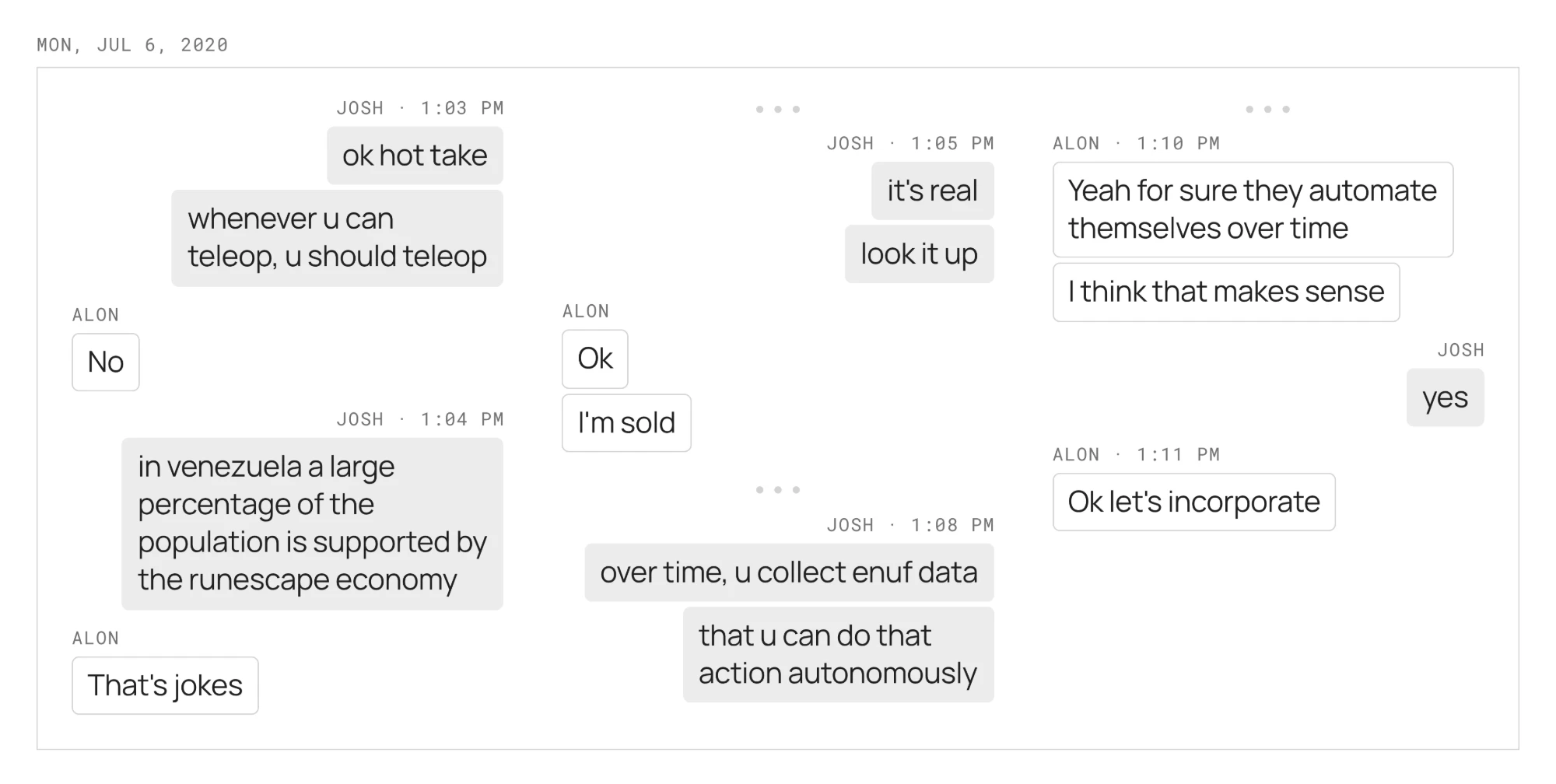
As roboticists, Alon and I spent our waking hours considering how to imbue machines with universal human intelligence. We were shocked to find that intelligence was already networked and priced. What if instead of toiling in the lab waiting for internet-scale robot intelligence, we could immediately start building a software and hardware platform to connect robots to the intelligence we humans already have, and over time collect enough data to control robots autonomously?
The more we studied this idea of robots powered by human “tutors,” the more unique and exciting its emerging properties became.
First, tutors let robots create positive net economic value immediately: by breaking the intelligence bottleneck, we could now place robots into tasks and industries that simply did not pencil out with specialized industrial automation. This is surprising in a world where robots usually have poor ROI stories due to massive customization costs for each project.
Second, anyone deploying a large volume of tutored robots would naturally be in the path of a massive flow of robot demonstrations. Market incentives alone would organically create a new internet of robot training data. This data could be used to train internet-scale robotics models pursuing true scaling laws, allowing the number of tutors to grow sub-linearly with robot deployment over time.
Third, with enough deployment and data, one could repeat this recipe task by task and market by market, until robots do all the work we could want them to do.
This seemed much more interesting to us than grad school. In February 2021, Alon and I officially incorporated Tutor Intelligence to build this platform and put robots everywhere.
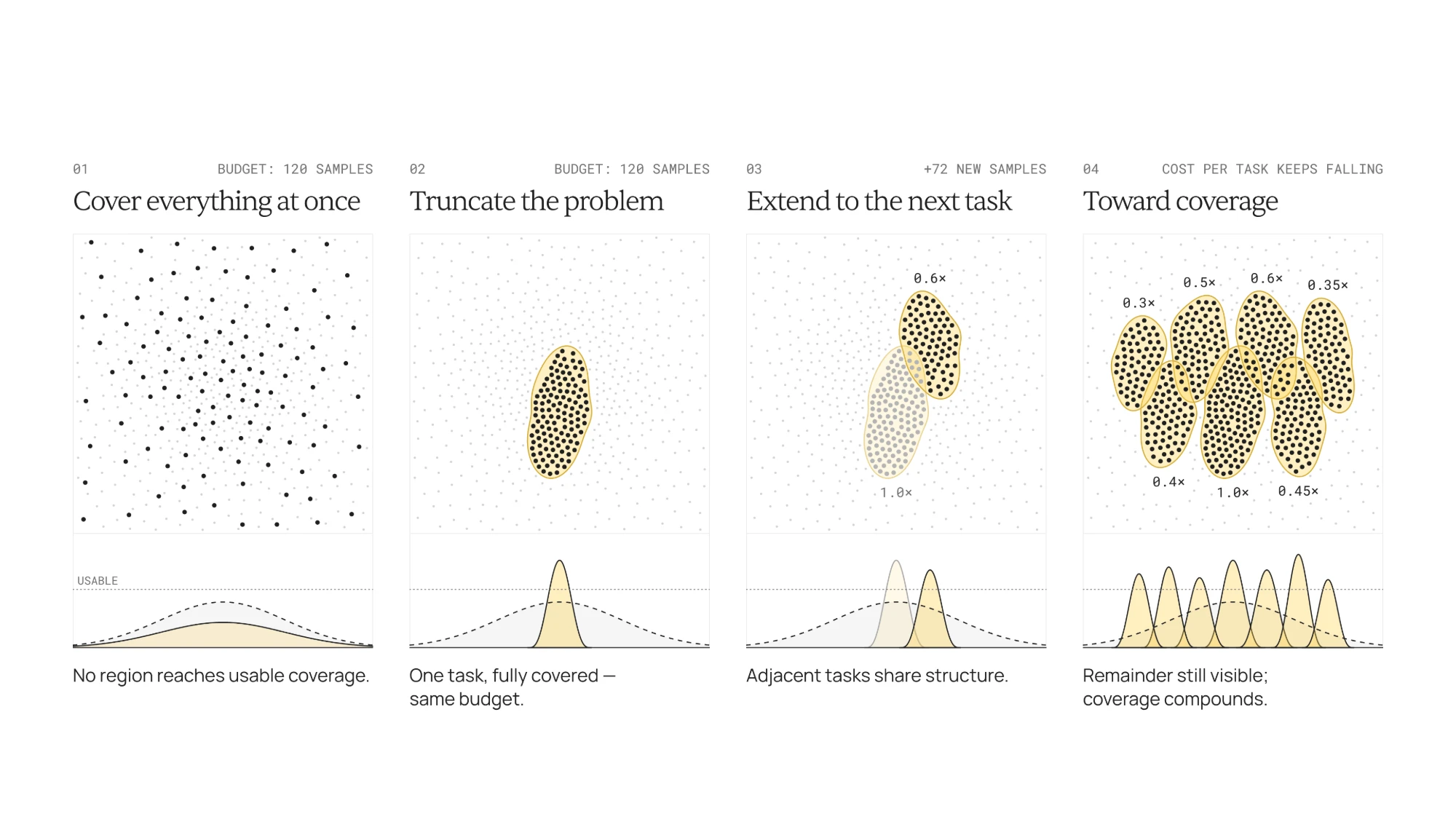
Under the Tutor model, hardware, intelligence, and customers are a co-design problem to identify and expand solvable regions of robot capability. If you can profitably solve a customer’s problem with your platform’s hardware and intelligence, you can invest those profits back into each layer, whether it’s training data for a foundation model or manufacturing capacity for robot hardware. Scaling each layer is what makes the next application easier and cheaper, unlocking more data, supply chain scale, and revenues over time.
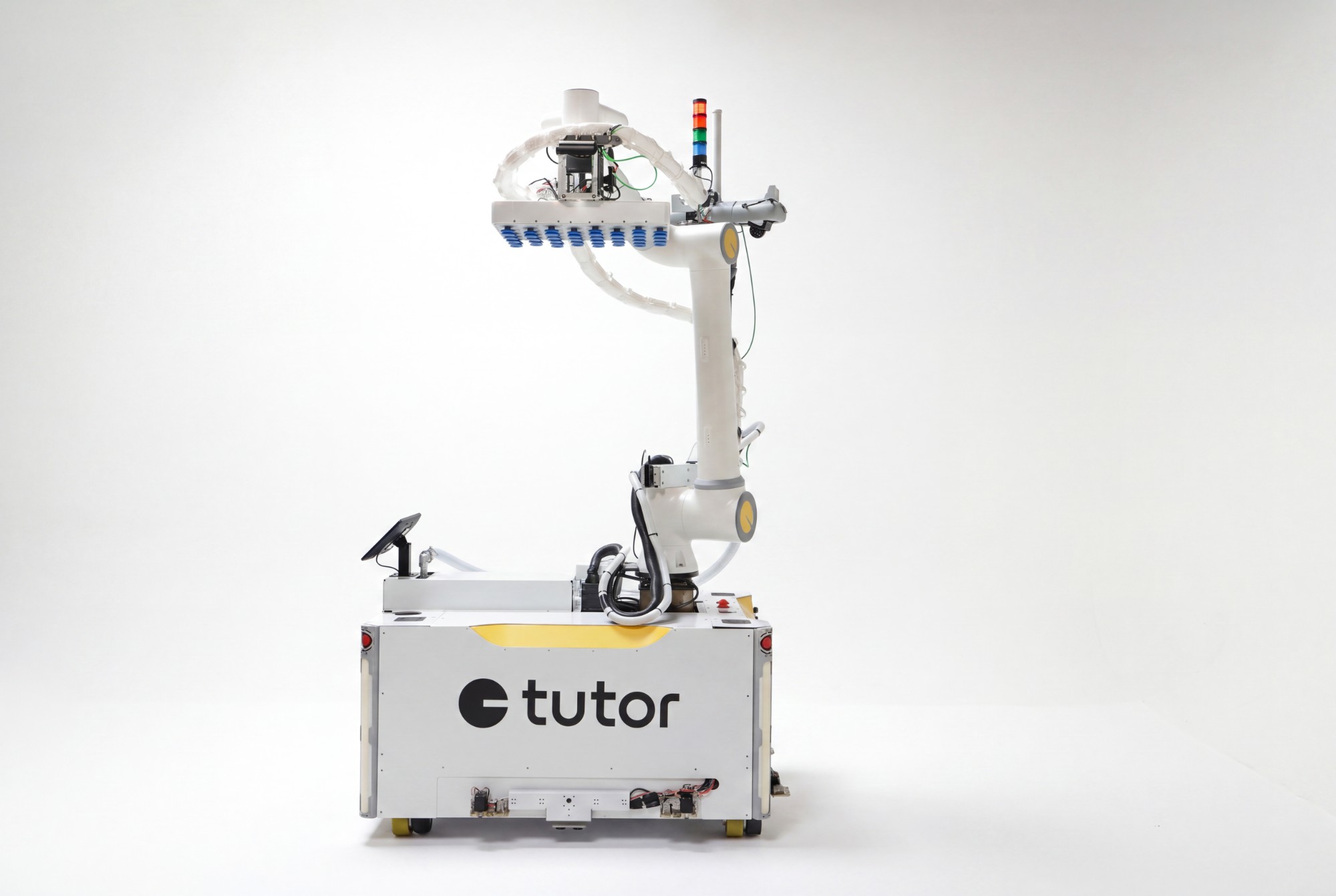
Tutor’s first robot is “Cassie.” Heavy, bulky materials like boxes and pallets are the “protocol buffers” connecting the physical world, and their movement today is done almost entirely by human workers with an average 3-month turnover and ~500K open positions. By taking on this work, Cassie is solving a massive problem for real customers, enabling Tutor to collect an enormous and growing dataset of real-world robot interactions. This upcoming year, Tutor will manufacture a plurality of all industrial robots in the United States, most of which will be Cassies.
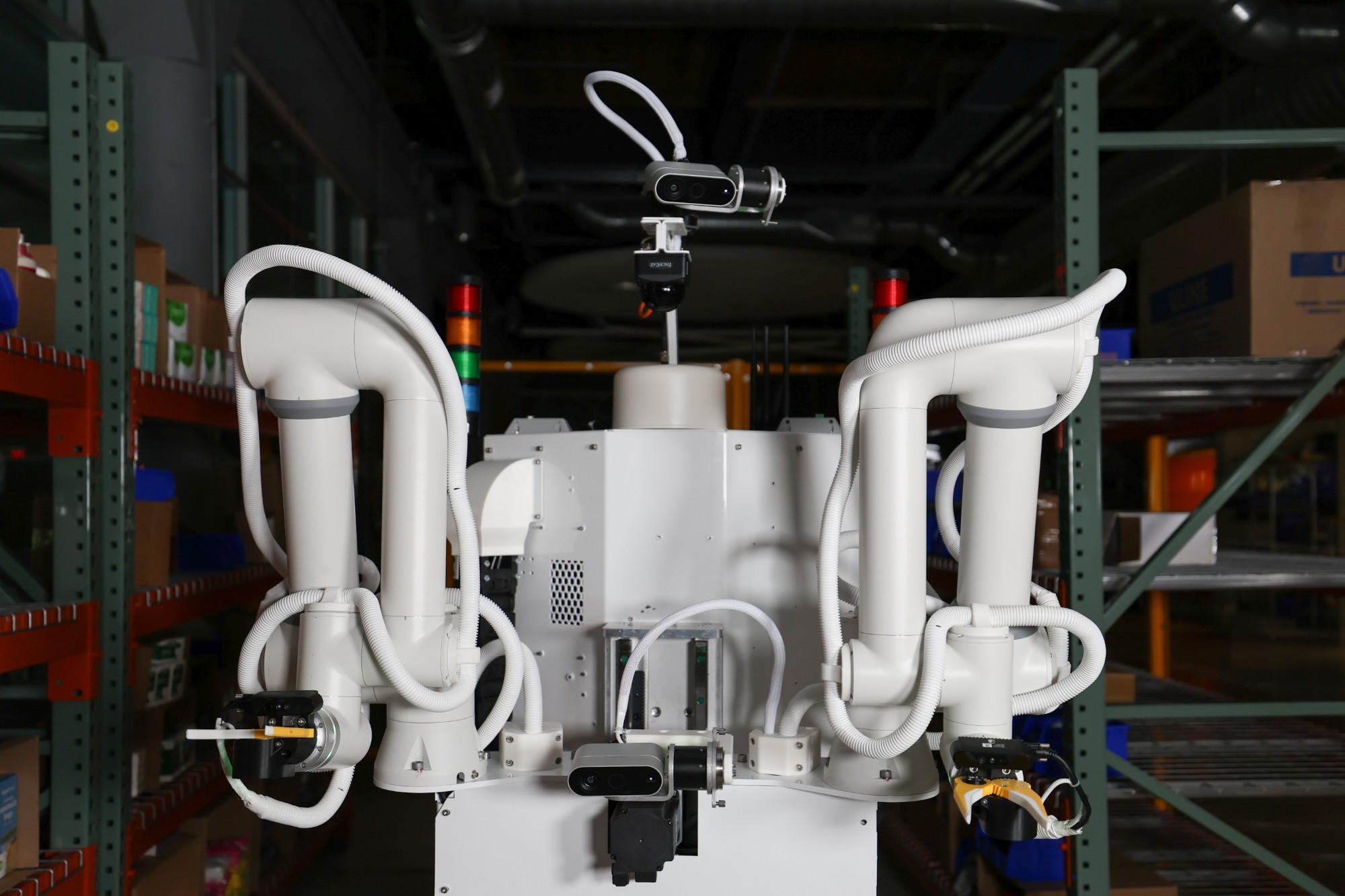
Tutor’s second robot is “Sonny,” a semi-humanoid built to handle a far greater diversity of dexterous human work. Sonny’s manufacturability at scale makes it an ideal robot not just for most handwork in manufacturing and logistics, but for arbitrary business-critical applications across the physical economy. Data collected by our Sonny fleet trains our largest and most capable robot foundation models at the frontier of rate and reliability.
Cassie and Sonny exist to create real value for real customers: solutions beget platforms. Owning the complete harness from hardware to software and applications gives Tutor maximal control of the full loop, letting us make the right tradeoffs in the early days of robotics to deliver value to our customers today. We don’t think Cassie and Sonny are the complete set of robots to perform all economically valuable physical work, but rather are early members in a pantheon of embodiments Tutor manufactures at scale, each efficiently covering a material cut of capabilities and industries in the real world.
Tutor robots are hard at work in scaled deployment across North America and have helped make and ship hundreds of millions of the products Americans rely on every day. We’re grateful for the trust customers from Fortune 50s to family-owned mom & pops place in our robots to maintain and scale their critical operations. And while robots are cool, the best complement we can hear is when they fade into the furniture: as one of our customers described, our robots are “one of the few things that I really have not, knock on wood, had to pay attention to at all.”
Common good
The best measure of whether any of this is working (and the ultimate KPI for a full-stack platform like Tutor) is how much economically valuable labor robots perform. Today, we estimate Tutor performs 0.02 basis points of economically valuable labor in the United States. If we are successful, we should perform far greater than 100% of today’s global economic value, as robots make moving atoms as cheap and easy as moving bits.
In the limit, I don’t think the value robots create will pool in any single component of the stack. At the dawn of the steam engine, dozens of companies competed ruthlessly to build better engines. Many of those companies are forgotten, and even the successful ones captured only a fraction of the value their inventions enabled. The value went to the networks built on top of them - the businesses that connected mines to mills to rail lines to markets - and a handful of those networks dominated the 19th and early 20th centuries. I think a similar story will repeat with robots: everything will work, but the generational businesses will live across the full stack, feeding the compounding loops that drive robot intelligence, distribution and supply chains.
Tutor’s mission is to proliferate robotics for the common good: robots that make your cereal cheaper today, mean fewer people go hungry tomorrow, and, in the fullness of time, bring our grandchildren a quality of life that would be unimaginable to those who came before us. One robot at a time.